

Character pieces remain central to piano repertoire. They are widely performed in recitals, studied by students, and continue to inspire contemporary composers. Unlike sonatas or concertos, they allow for intimate expression and experimentation, making them a vital part of the piano’s voice in classical music.
Common types of character pieces include:
-
Nocturnes: Short lyrical piano pieces evoking night moods, often intimate and poetic, emphasizing melody and atmosphere rather than virtuosity, pioneered by John Field and perfected by Chopin.
-
A Polonaise in piano music is a stately Polish dance form, marked by triple meter, rhythmic drive, majestic character, and often used by Chopin to express national pride and virtuosity.
-
Preludes: Originally introductory works, later independent explorations of harmony, texture, and mood; concise piano pieces that span diverse tonalities, exemplified by Chopin’s 24 Preludes and Debussy’s impressionistic miniatures.
-
Etudes: Technical studies designed to develop pianistic skill, transformed into concert works by Chopin and Liszt; they combine virtuoso challenges with expressive depth, elevating practice material into art.
-
Ballades: Large‑scale narrative piano works inspired by literary ballads, blending drama and lyricism; Chopin’s four Ballades exemplify storytelling through music, with shifting moods and structural innovation.
-
Impromptus: Free‑form, improvisatory piano pieces with spontaneous character; lyrical yet virtuosic, often structured in ternary form, balancing elegance and expressive immediacy, as in Schubert’s celebrated Impromptus.
-
Fantasies: Expansive, imaginative piano works emphasizing freedom of form and dramatic contrasts; they often combine improvisatory spirit with structural ambition, ranging from Mozart’s Fantasy in D minor to Schumann’s Fantasie in C.
-
Bagatelles: Brief, light piano pieces, often playful or whimsical; Beethoven popularized the form, showing how miniature works can convey charm, wit, and expressive variety within concise dimensions.
-
Arabesques: Decorative piano pieces inspired by ornate patterns, emphasizing flowing lines and elegance; Schumann and Debussy used the form to evoke refinement, grace, and ornamental beauty in sound.
-
Would you like me to arrange these definitions into a clean CSV table (Form, Definition) so they slot neatly into your archive alongside the composer profiles?
🎹 The Top Ten Classical Piano Solo Composers

-
Bach and Scarlatti laid the foundation for keyboard artistry in the Baroque era.
-
Mozart and Beethoven defined and expanded the Classical sonata form.
-
Chopin, Schumann, Liszt, and Schubert embodied Romantic lyricism and virtuosity.
-
Debussy transformed piano writing with impressionistic textures.
-
Rachmaninoff carried Romantic grandeur into the 20th century with lush harmonies.
-
Together, they represent the core canon of piano literature, spanning contrapuntal rigor, classical elegance, romantic passion, and modern color.

Johann Sebastian Bach
Johann Sebastian Bach (1685–1750), born in Eisenach, Germany, was an organist, teacher, and Kapellmeister whose career spanned Weimar, Köthen, and Leipzig. Known for his devotion to church service and family life, he became a central figure in German musical tradition, admired for his discipline, teaching, and mastery of contrapuntal craft.
Though Bach wrote extensively for organ and ensembles, his keyboard output for the harpsichord and clavichord laid the foundation for modern piano repertoire. His collections such as the Well‑Tempered Clavier and English and French Suites explore every key, demonstrating contrapuntal mastery and expressive range. The Partitas and Goldberg Variations combine technical brilliance with architectural design. While conceived for earlier instruments, these works translate seamlessly to the piano, offering both pedagogical and artistic value. Bach’s keyboard music encompasses preludes, fugues, inventions, and dance movements, each revealing clarity of structure and intellectual depth. His approach to thematic development and harmonic exploration influenced generations of composers, from Mozart to Chopin. The sheer breadth of his keyboard oeuvre makes him a cornerstone of piano literature, embodying both discipline and imagination.
During his lifetime, Bach was respected as an organist and teacher but less celebrated as a composer. His keyboard works were valued by students and colleagues, though they were considered scholarly rather than fashionable. He earned steady employment in church and court positions, but his reputation remained regional. Only later did his piano works gain widespread recognition, particularly through the advocacy of later composers. In his own era, his success lay in practical teaching and service rather than public acclaim, yet his legacy as a keyboard master eventually became universal.

Wolfgang Amadeus Mozart
Wolfgang Amadeus Mozart (1756–1791), born in Salzburg, Austria, was a child prodigy who toured Europe with his family. He settled in Vienna, balancing freelance work with court commissions. Known for his brilliance, charm, and tireless productivity, he lived a short but intense life, leaving an indelible mark on musical culture.
Mozart’s piano oeuvre spans sonatas, concertos, variations, and smaller character pieces, reflecting both Classical clarity and expressive depth. His 18 piano sonatas chart his development from youthful charm to mature sophistication, balancing lyricism with structural mastery. The piano concertos, numbering 27, are central to his output, combining virtuosic brilliance with orchestral dialogue; highlights include Nos. 20 in D minor, 21 in C major, and 23 in A major. Mozart also wrote sets of variations on popular themes, demonstrating wit and inventiveness, as well as smaller works such as rondos and fantasies. His piano music embodies balance, elegance, and emotional nuance, offering performers both technical challenge and interpretive richness. Collectively, these works helped establish the piano as a central instrument of the Classical era, influencing generations of composers and shaping the repertoire.
Mozart was admired in his lifetime as both pianist and composer, dazzling audiences with improvisation and virtuosity. His concertos were often written for his own performances, which drew acclaim in Vienna and beyond. Financially, he struggled with unstable patronage, yet his reputation as a pianist was strong. He was celebrated for his brilliance, charm, and ability to captivate listeners. Though his career was marked by financial insecurity and an early death, his piano works and performances secured him lasting fame, and he was recognized by contemporaries as one of the greatest musicians of his age.

Ludwig van Beethoven
Ludwig van Beethoven (1770–1827), born in Bonn, Germany, moved to Vienna where he became a central figure in European music. Despite progressive deafness, he pursued composition and performance with determination, reshaping musical culture. His resilience, independence, and uncompromising spirit made him a symbol of artistic freedom and Romantic individuality.
Beethoven’s piano oeuvre spans early Classical forms to groundbreaking Romantic statements. His 32 piano sonatas chart a journey of innovation, from the lyrical early works to the dramatic middle period and visionary late sonatas. These include landmarks such as the Pathétique, Waldstein, Appassionata, and Hammerklavier, each expanding expressive and structural possibilities. His piano concertos, five in total, combine virtuosity with orchestral dialogue, culminating in the Emperor Concerto. Beethoven also wrote variations, bagatelles, and smaller pieces that reveal wit and experimentation. Collectively, his piano works embody a laboratory of ideas, pushing the instrument’s technical and emotional boundaries. They influenced every subsequent composer, redefining the piano as a medium for profound artistic exploration.
Beethoven achieved considerable fame as a pianist in his early career, admired for his improvisational brilliance and fiery temperament. His performances in Vienna established him as a formidable virtuoso. As deafness advanced, his public playing diminished, but his reputation as a composer grew. Audiences sometimes struggled with the radical nature of his works, yet he commanded respect and patronage. Financially, he lived independently, supported by aristocratic admirers. Though his later years were marked by isolation, his stature as a pianist‑composer was secure, and he was recognized as one of the greatest musicians of his age.

Franz Schubert
Franz Schubert (1797–1828), born in Vienna, lived a short but prolific life. He moved within circles of friends and patrons, writing tirelessly despite financial hardship. His gentle personality and devotion to music made him a beloved figure, though recognition came largely after his death.
Schubert’s piano music ranges from intimate dances to expansive sonatas. His impromptus and Moments musicaux are lyrical miniatures, blending song‑like melodies with harmonic subtlety. The piano sonatas, though uneven in structure, contain profound beauty, especially the late works in A major, B‑flat major, and C minor. He also wrote variations, fantasies, and character pieces, including the Wanderer Fantasy, which integrates virtuosity with symphonic breadth. His dances—waltzes, ländler, and écossaises—capture Viennese charm. Overall, Schubert’s piano oeuvre emphasizes lyricism, harmonic exploration, and intimacy, extending the expressive range of the instrument.
Schubert was not widely recognized as a pianist in his lifetime. He played competently but lacked virtuoso flair, preferring to compose and share music among friends. His piano works were published sporadically, with limited success. Financial struggles and illness curtailed his career. Only after his death did his piano music gain prominence, securing his reputation as a master of lyricism and harmony.

Robert Schumann
Robert Schumann (1810–1856), born in Germany, combined careers as composer, critic, and editor. His life was marked by creativity, literary interests, and struggles with mental health. Married to pianist Clara Wieck, he became central to Romantic culture, though illness overshadowed his later years.
Schumann’s piano works are deeply personal, often inspired by literature and imagination. Early cycles such as Carnaval, Papillons, and Kinderszenen present character pieces with vivid imagery. Kreisleriana and Fantasie in C are monumental, blending passion with structural innovation. His piano sonatas and concertos reveal Romantic intensity, while Album for the Young reflects pedagogical aims. Schumann’s piano music emphasizes poetic narrative, harmonic daring, and psychological depth, making the instrument a vehicle for inner expression.
Schumann’s piano works were admired by progressive circles but sometimes criticized for unconventional structure. As a pianist, his career was limited by injury to his hand, preventing virtuoso performance. His reputation grew through composition and criticism, while Clara championed his works in concert. Financially, he relied on publishing and teaching. Though his success was mixed, he was respected as a visionary, and his piano music gained lasting influence.
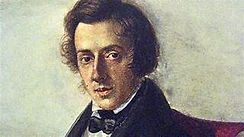
Frederik Chopin
Frédéric Chopin (1810–1849), born in Poland and later settled in Paris, was a prodigious pianist whose artistry captivated Europe’s salons. Frail in health yet resilient in spirit, he became a central figure in Romantic culture, admired for his refinement, teaching, and influence on musical taste across aristocratic and intellectual circles.
Chopin’s oeuvre is almost entirely devoted to the piano, making him unique among major composers. His works span intimate miniatures, virtuosic showpieces, and poetic cycles, all unified by a distinctive voice that elevated the instrument’s expressive potential. He cultivated genres such as the nocturne, mazurka, polonaise, waltz, étude, prelude, scherzo, and ballade, each transformed into vehicles of personal expression and technical innovation. The études (Opp. 10 and 25) revolutionized piano pedagogy, combining technical challenges with profound artistry. The nocturnes refined lyrical intimacy, while the mazurkas and polonaises drew on Polish dance rhythms, embedding national identity into art music. His ballades (four in total) are expansive, narrative works that blend drama with lyricism, while the scherzos push virtuosity to extremes. The 24 Preludes, Op. 28, cover all major and minor keys, offering a kaleidoscope of moods in concise form. Chopin’s waltzes, though often salon pieces, reveal elegance and subtlety, while larger works like the Sonatas Nos. 2 and 3 demonstrate structural mastery. His two piano concertos, though youthful, remain central to the repertoire, showcasing both brilliance and poetic depth. Overall, Chopin’s piano music redefined the instrument’s role, merging national identity, technical innovation, and emotional nuance into a body of work that remains foundational for pianists and listeners alike.
Chopin achieved remarkable success as a pianist and composer during his lifetime, though his career differed from the virtuoso path of contemporaries like Liszt. He preferred intimate salon settings over large concert halls, valuing refinement and subtlety over sheer display. This choice limited his public exposure but enhanced his reputation among Europe’s elite. In Paris, he became a sought‑after teacher, earning substantial income from aristocratic pupils. His performances were rare but highly esteemed, admired for their delicacy, nuance, and poetic touch. Critics and audiences recognized his originality, though some conservative circles found his harmonic innovations perplexing. Financially, Chopin lived comfortably, supported by teaching and patronage, though illness often curtailed his activity. His reputation as a pianist was not based on power or bravura but on intimacy and artistry, qualities that endeared him to discerning listeners. By the time of his death in 1849, he was celebrated across Europe as one of the era’s most influential figures in piano music, leaving a legacy that secured his place among the immortals.

Franz Liszt
Franz Liszt (1811–1886), born in Hungary, became Europe’s most celebrated virtuoso pianist. His career spanned dazzling tours, teaching, and composition. Later he turned toward religious life and mentorship, leaving a legacy as both performer and innovator.
Liszt’s piano oeuvre is vast, ranging from virtuosic showpieces to profound meditations. His Transcendental Études and Paganini Études set new technical standards, while his Hungarian Rhapsodies celebrate national identity. The Années de pèlerinage collections reflect travel and introspection, blending virtuosity with poetic depth. Liszt pioneered the symphonic poem and applied similar ideas to piano works, creating narrative structures. His B minor Sonata stands as a monumental achievement, integrating thematic transformation and architectural unity. He also wrote paraphrases, transcriptions, and arrangements, expanding the piano’s repertoire and possibilities. Liszt’s piano music embodies both spectacle and substance, redefining the instrument’s role in Romantic culture.
Liszt was the most famous pianist of his time, adored across Europe for his virtuosity and charisma. His concert tours drew unprecedented crowds, and his performances inspired phenomena dubbed ‘Lisztomania.’ Financially successful, he later devoted himself to teaching and composition. While some critics dismissed his works as showy, others recognized their innovation. His reputation as a pianist was unmatched, and his influence as a composer grew steadily, ensuring his legacy as both virtuoso and visionary.

Claude Debussy
Claude Debussy (1862–1918), born in France, studied at the Paris Conservatoire and became a leading figure in modern music. He challenged traditional harmony and form, drawing inspiration from literature, art, and non‑Western influences. His career reflected innovation, independence, and a pursuit of new sound worlds.
Debussy’s piano works embody impressionistic color and atmosphere, redefining the instrument’s palette. His early Arabesques and Suite bergamasque reveal charm and lyricism, while later works such as Estampes and Images explore exoticism and tonal ambiguity. The Préludes (two books) present miniature soundscapes, each with evocative titles, while Children’s Corner captures playful innocence. His Études, written late in life, combine technical rigor with modernist exploration. Debussy’s piano music often avoids traditional development, favoring suggestion, resonance, and timbre. Major works like L’Isle joyeuse and the two books of Préludes showcase his mastery of atmosphere. Collectively, his piano oeuvre transformed the instrument into a medium of impressionistic poetry, influencing countless composers.
Debussy was admired in his lifetime for his originality, though his piano works sometimes puzzled conservative audiences. He performed occasionally but was not a virtuoso pianist in the Lisztian sense. His reputation grew through teaching, writing, and composition. By the early 20th century, he was recognized as a leader of modern French music, though financial struggles and illness marked his later years. His piano works were appreciated by discerning circles, and his influence spread internationally, securing his place as a pioneer of new sound worlds.

Sergei Rachmaninov
Sergei Rachmaninov (1873–1943), born in Russia, was a pianist, conductor, and composer who emigrated after the Revolution. He lived in Europe and the United States, balancing performance with composition. Known for his towering presence and melancholic temperament, he embodied late Romantic ideals while adapting to new cultural environments.
Rachmaninov’s piano works combine lush harmonies, sweeping melodies, and formidable technical demands. His two sets of Études‑Tableaux explore pictorial ideas through virtuosic textures. The Moments musicaux and Preludes (including the famous C‑sharp minor) reveal lyricism and drama. His piano sonatas, especially Nos. 2 and 3, are expansive and symphonic in conception. The four piano concertos, particularly Nos. 2 and 3, stand as pinnacles of Romantic virtuosity and emotional depth. Rachmaninov also wrote transcriptions and smaller pieces that highlight his pianistic imagination. Collectively, his piano oeuvre bridges Romantic tradition with modern sensibility, offering performers both technical challenge and expressive richness.
Rachmaninov was celebrated as one of the greatest pianists of his time, admired for his powerful technique and deep interpretation. His compositions were popular with audiences, though critics sometimes viewed them as conservative. Financially, he thrived through performance tours, especially in America. While exile brought personal sorrow, his reputation as pianist‑composer remained strong, and he enjoyed considerable success during his lifetime.
-
The piano repertoire is the largest of any instrument save the voice. With millions of works to choose from, where do you start?Here’s a list of the top ten composers, most celebrated for their classical piano solo works:
-
Johann Sebastian Bach, Goldberg Variations
-
Ludwig van Beethoven, Piano Sonata No.21 in C, Op.53, ‘Waldstein’ Orchestral scale music from the middle period. Sonata Op.106 in B flat major, ‘Hammerklavier’ - the slow movement is 18 minutes on its own!
-
Frédéric Chopin, 10: Chopin: Polonaise-Fantaisie, Op. 61
-
Franz Schubert, Sonata in A major, D959 (and C minor and B flat Major sonatas) Slow barcolle explodes into the chaos then a magnificant scherzo and back to resolution (Early Romantic) Impromptus, Moments Musicaux, late sonatasDeeply lyrical, blending song-like qualities into piano writing.
-
Claude Debussy, Preludes, Books 1 & 2: 2 books of 12 pieces each (the famous 24 items again ) each has a short descriptive title, creation of atmosphere and the range of imagination are key
-
Sergei Rachmaninoff,
-
Wolfgang Amadeus Mozart,
-
Robert Schumann Fantasie in C, Op.17 - the hidden communication between himself and the forbidden Clara Wieck
-
Domenico Scarlatti
-
Brahms 6 Klavierstücke Op. 118 written for Clara Schumann after she could no longer play the paino due to her arthritis - especially notable is Intermezzo in A major (No.2)
-
Johann Sebastian Bach Baroque Well-Tempered Clavier, Goldberg VariationsMaster of counterpoint and keyboard architecture.
-
Ludwig van Beethoven Classical/Romantic32 Piano Sonatas (e.g., Moonlight, Appassionata)Expanded piano sonata form with dramatic intensity. Diabelli Variations
-
Frédéric Chopin Romantic Nocturnes, Études, Ballades, PolonaisesPoet of the piano, lyrical and virtuosic. Sonata No.2 in B flat minor includes the coopted Funeral March described as Night winds sweeping over the church yard graves
-
Franz Liszt Romantic Hungarian Rhapsodies, Transcendental ÉtudesVirtuoso showmanship, pioneered the solo recital.
-
Claude Debussy Impressionist Clair de Lune, Préludes, EstampesEvoked atmosphere and color, breaking tonal boundaries.
-
Sergei Rachmaninoff Late RomanticÉtudes-Tableaux, Preludes, SonatasRich harmonies, sweeping melodies, technical brilliance.
-
Wolfgang Amadeus Mozart ClassicalPiano Sonatas, Fantasia in D minorElegant clarity, balance, and melodic perfection.
-
Robert SchumannRomantic Carnaval, Kinderszenen, FantasiestückePsychological depth and character pieces.
-
Domenico Scarlatti Baroque555 Keyboard SonatasVirtuosic hand-crossing, Iberian dance rhythms.
Special Feature on Chopin
Frédéric Chopin’s piano music is celebrated for its poetic lyricism, technical brilliance, and deep emotional resonance. His works remain central to the Romantic repertoire, embodying both national identity and universal human expression.
Frédéric Chopin (1810–1849), the Polish-French composer, devoted nearly his entire output to the piano, making him unique among major Romantic figures. His compositions include nocturnes, mazurkas, polonaises, études, preludes, ballades, and sonatas, each showcasing different facets of his artistry. Chopin’s music blends classical discipline—influenced by Bach and Mozart—with the expressive freedom of Romanticism, inspired by bel canto opera and Polish folk traditions
One hallmark of Chopin’s piano writing is its lyrical quality. His melodies often resemble vocal lines, soaring with elegance and subtle ornamentation. The nocturnes, for example, capture intimate moods of longing and reflection, while the ballades unfold dramatic narratives with sweeping contrasts. At the same time, Chopin expanded harmonic language, employing chromaticism and unexpected modulations that influenced later composers.
Equally significant are his études, which revolutionized the genre. Traditionally written as technical exercises, Chopin transformed them into concert works of profound artistry. Pieces like the “Revolutionary Étude” or “Winter Wind” demand extraordinary virtuosity yet remain deeply expressive ourchopin.com. His ability to fuse technical innovation with emotional depth set new standards for pianists.
Chopin also infused his music with Polish identity, particularly through mazurkas and polonaises. These dance forms, rooted in folk rhythms, became symbols of national pride during a time of political upheaval. Thus, his piano works are not only artistic achievements but also cultural statements.
Our piano 'Character Pieces'

Chopin
Ballade No. 1 in G minor

Chopin’s first Ballade is dramatic and narrative, unfolding with sweeping contrasts of lyricism and stormy passion. Inspired by literary ballads, it combines storytelling with virtuosic piano writing. Its opening chords set a heroic tone, leading to moments of tenderness and explosive climaxes, epitomizing Romantic intensity.
Attended:
Chopin
Ballade No. 4 in F minor
The fourth Ballade is Chopin’s most complex, weaving intricate counterpoint and harmonic daring. It begins with a gentle theme that evolves into turbulent passages of immense power. The work balances poetic introspection with dramatic grandeur, culminating in a fiery coda. It is considered a pinnacle of Chopin’s artistry.
Attended:
Chopin
Etude in E major, Op. 10 No. 3
Known as 'Tristesse,' this étude combines technical study with lyrical beauty. Its singing melody conveys melancholy and longing, contrasting with virtuosic passages. Chopin transformed the étude genre into concert works of emotional depth. This piece exemplifies his ability to merge technical brilliance with heartfelt expression.
Attended:
Chopin
Fantaisie-Impromptu in C-sharp minor
A dazzling showpiece, the Fantaisie-Impromptu contrasts rapid, virtuosic outer sections with a lyrical, nocturne-like middle. Its cascading arpeggios and dramatic rhythms showcase Chopin’s brilliance. Though published posthumously, it remains one of his most beloved works, admired for its passionate energy and memorable melodic contrasts.
Attended:
Chopin
Mazurka in A minor
A reflective dance piece, this mazurka blends Polish folk rhythms with melancholy lyricism. Its irregular accents and modal inflections evoke rustic charm while maintaining sophistication. Chopin’s mazurkas often express national identity, and this one captures both intimacy and subtle emotional depth, highlighting his unique voice in the genre.
Attended:
Chopin
Mazurka in B-flat major
This lively mazurka captures the spirit of Polish dance with buoyant rhythms and playful accents. Its cheerful character contrasts with Chopin’s more introspective mazurkas. Folk-inspired yet refined, it demonstrates his ability to elevate traditional forms into poetic piano miniatures, balancing simplicity with elegance.
Attended:
Chopin
Mazurka in C-sharp minor
A darker mazurka, this piece combines folk dance rhythms with poignant harmonies. Its chromaticism and shifting accents create tension and expressive depth. Chopin’s mazurkas often reflect personal and national sentiment, and this one conveys introspection and subtle melancholy within the dance framework.
Attended:
Chopin
Mazurka no.40 in F-minor
1846
Written in 1846, this mazurka is more somber, combining folk rhythms with expressive melancholy. Its minor key and chromatic inflections create a reflective mood. Chopin’s late mazurkas often balance national dance elements with personal introspection, making this piece a poignant example of his mature style.
Attended:
Chopin
Mazurka no.41 - Op.63 no.3: C#-minor (1846)
1846
Composed in 1846, this mazurka is introspective and harmonically adventurous. Its shifting accents and chromatic lines evoke tension and depth. Written in Paris, it reflects Chopin’s late style, blending Polish dance rhythms with personal expression. It remains admired for its subtle complexity and emotional resonance.
Attended:
Chopin
Nocturne in B-flat minor
This nocturne is tender and melancholic, with a lyrical melody supported by rich harmonies. Its introspective mood contrasts with moments of intensity. Chopin’s nocturnes often evoke poetic night scenes, and this one captures both intimacy and emotional depth, showcasing his gift for expressive lyricism.
Attended:
Chopin
Nocturne in C-sharp minor
A passionate nocturne, this piece combines lyrical beauty with dramatic outbursts. Its haunting melody and turbulent middle section convey deep emotion. Often performed as a standalone favorite, it exemplifies Chopin’s ability to balance intimacy with intensity, making it one of his most memorable nocturnes.
Attended:
Chopin
Nocturne in D-flat major,
This nocturne is lyrical and refined, with flowing melodies and lush harmonies. Its serene atmosphere is punctuated by moments of dramatic intensity. Chopin’s nocturnes often blend poetic calm with expressive passion, and this piece exemplifies his mastery of nuance and emotional contrast.
Attended:
Chopin
Nocturne in E-flat major, Op. 9 No. 2
Perhaps Chopin’s most famous nocturne, this piece features a soaring melody over gentle accompaniment. Its lyrical beauty and expressive ornamentation create a timeless atmosphere. Beloved by audiences worldwide, it epitomizes Romantic piano poetry and remains a cornerstone of Chopin’s repertoire.
Attended:
Chopin
Piano Sonata No. 2 “Funeral March”
This monumental sonata includes the famous Funeral March movement, symbolizing grief and solemnity. Its dramatic contrasts and structural innovation make it one of Chopin’s greatest works. The piece balances lyrical passages with stormy intensity, reflecting both personal emotion and universal themes of mortality.
Attended:
Chopin
Polonaise - fantaisie in A flat
1845
A late masterpiece, this polonaise blends national dance rhythms with free fantasy. Its expansive form and harmonic daring reflect Chopin’s mature style. Written in 1846, it combines grandeur with introspection, making it one of his most profound and complex works.
Attended:
Chopin
Polonaise in A-flat major, Op. 53
This triumphant polonaise is bold and majestic, symbolizing Polish pride. Its powerful rhythms and sweeping melodies convey heroic spirit. Written in 1842, it remains one of Chopin’s most celebrated works, admired for its grandeur and patriotic resonance.
Attended:
Chopin
Polonaise in E flat minor
1835
A powerful dance in a minor key, this polonaise blends bold rhythms with dark harmonies. Written in Paris, it reflects Chopin’s national pride and personal intensity. Its dramatic contrasts and virtuosic passages make it a striking example of his ability to elevate folk-inspired forms into concert masterpieces.
Attended:
Chopin
Polonaise-Fantaisie in A-flat major
A late masterpiece, this expansive work combines polonaise rhythms with free fantasy. Composed in 1846, it reflects Chopin’s mature harmonic daring and introspection. Its sweeping form and emotional depth make it one of his most profound piano works, balancing grandeur with subtle poetry.
Attended:
Chopin
Prelude in C major
The opening prelude of Op. 28, this brief piece bursts with energy and clarity. Its rapid arpeggios and bright tonality set the stage for the cycle. Though short, it captures Chopin’s gift for concise expression and remains a favorite for its brilliance and vitality.
Attended:
Chopin
Prelude in D-flat major “Raindrop”
One of Chopin’s most famous preludes, the 'Raindrop' evokes falling water through repeated notes. Its serene opening contrasts with a stormy middle section before returning to calm. Written in 1839, it is admired for its atmospheric imagery and emotional depth, blending simplicity with dramatic power.
Attended:
Chopin
Prelude in E minor
This prelude is dark and mournful, with a descending melody that conveys despair. Its stark harmonies and somber mood make it one of Chopin’s most haunting miniatures. Despite its brevity, it captures profound emotion, epitomizing his ability to express tragedy in concise musical form.
Attended:
Chopin
Scherzo No. 2 in B-flat minor, Op. 31
A dramatic and virtuosic work, this scherzo contrasts stormy outer sections with a lyrical middle. Written in 1837, it showcases Chopin’s ability to combine intensity with poetic beauty. Its bold chords and sweeping passages make it a favorite among pianists and audiences alike.
Attended:
Chopin
Étude in A minor “Winter Wind”
This étude demands extraordinary technique, with relentless right-hand runs over a stormy left-hand accompaniment. Nicknamed 'Winter Wind,' it evokes tempestuous energy and dramatic struggle. Despite its technical difficulty, it remains musically expressive, exemplifying Chopin’s transformation of études into concert works of passion and brilliance.
Attended:
Chopin
Étude in C minor “Revolutionary”
Composed in 1831 during Poland’s uprising, this fiery étude symbolizes defiance and struggle. Its rapid left-hand passages create relentless momentum, while the right hand adds dramatic intensity. Known as the 'Revolutionary Étude,' it combines technical challenge with patriotic spirit, making it one of Chopin’s most iconic works.
Attended:
Chopin
Étude in E major “Tristesse”
This lyrical étude, nicknamed 'Tristesse,' conveys melancholy and longing through its singing melody. Written in 1832, it contrasts expressive beauty with technical demands. Chopin’s ability to merge emotional depth with pianistic brilliance makes it one of his most beloved études, admired for its poignant simplicity.
Attended:
Chopin
Mazurka no.39 - Op.63 no.1: B-major (1846)
Composed in 1846, this mazurka is bright and lyrical, blending folk dance rhythms with refined harmonic language. Its cheerful character and elegant phrasing reflect Chopin’s late style. Written in Paris, it exemplifies his ability to transform Polish folk elements into sophisticated piano poetry.
Attended:
Debussy
Arabesque No. 1 (Deux Arabesques)
A graceful, flowing piano miniature, Arabesque No. 1 captures Debussy’s early impressionist style. Its delicate arpeggios and shimmering textures evoke elegance and light, blending classical form with modern harmonic color. The piece remains one of Debussy’s most popular works, admired for its charm and refined atmosphere.
Attended:
Debussy
Clair de Lune (Suite Bergamasque)
Clair de Lune is Debussy’s most famous piano piece, evoking moonlight through shimmering harmonies and lyrical melody. Its gentle rhythm and impressionist textures create a dreamlike atmosphere. Written in his Suite Bergamasque, it blends Romantic sentiment with modern harmonic color, enchanting listeners with its timeless beauty and serenity.